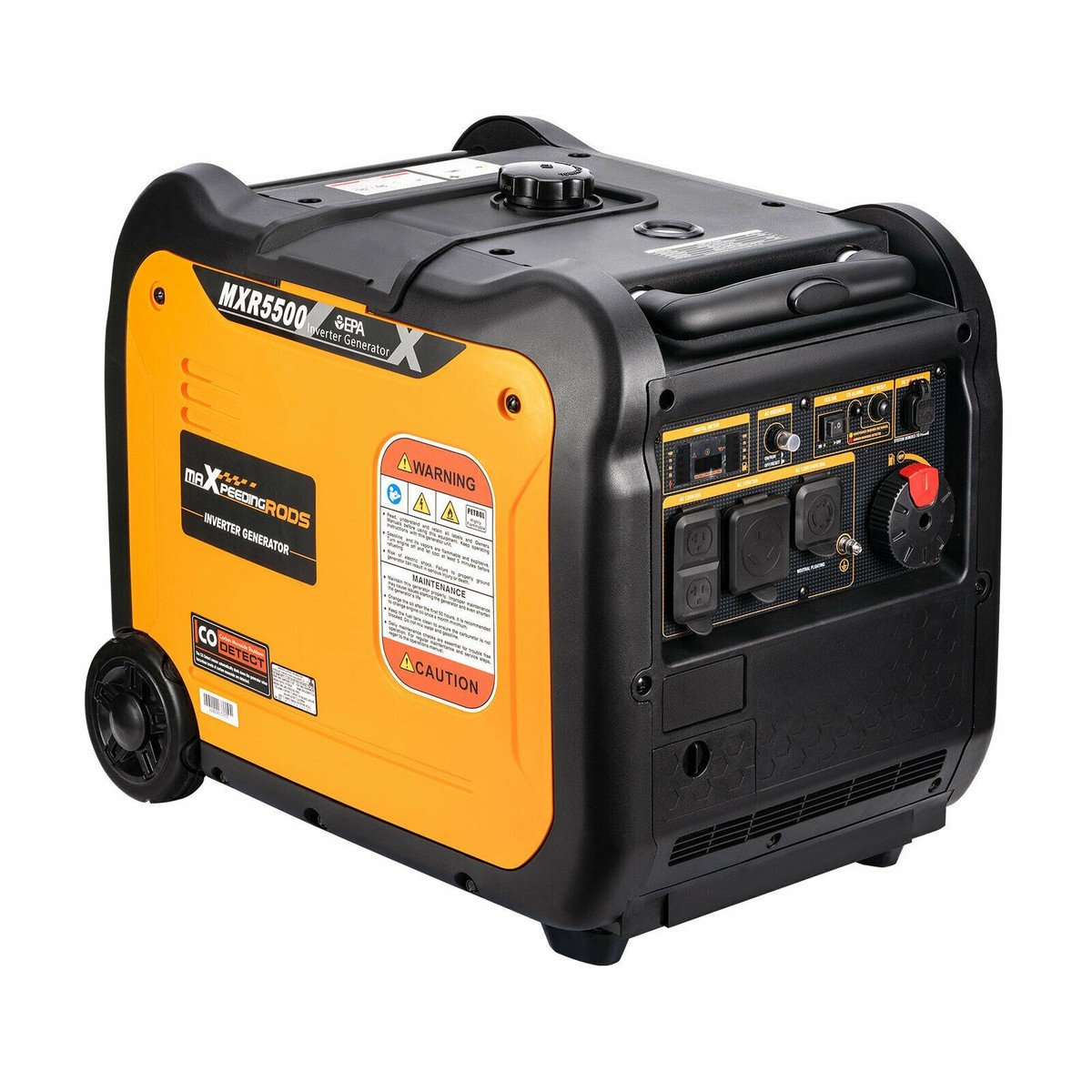
When the grid goes silent, or you're miles from the nearest outlet, a 5500-watt generator often steps in as your reliable power partner. But understanding the nuances of 5500 Watt Generator Fuel Types, Efficiency, and Real-World Running Costs is paramount. It’s not just about turning it on; it’s about making informed choices to ensure your generator runs optimally, efficiently, and without breaking the bank.
Think of your generator as a mini power plant. Like any engine, it needs the right fuel, proper care, and smart operation to perform at its peak. This guide will walk you through everything you need to know, from the types of fuel your 5500W workhorse might consume to the hidden factors that impact its efficiency and, ultimately, your wallet.
At a Glance: Your 5500W Generator Quick Facts
- Primary Fuel: Most 5500-watt generators, especially popular models like the Onan 5500, primarily run on gasoline.
- Typical Efficiency: Generators generally convert fuel to electricity with 80-95% efficiency, with inverter models often leading the pack.
- Fuel Consumption (Gasoline): Expect about 0.5 to 0.75 gallons per hour (gph) at 50% load, potentially reaching 0.9-1.0 gph at full load.
- Standard Runtime: With a common 6-gallon fuel tank, you can anticipate 8 to 12 hours of continuous operation at moderate loads.
- Key Cost Driver: The electrical load you place on the generator is the biggest factor determining how much fuel it burns.
- Maintenance Matters: Regular upkeep dramatically improves efficiency and extends the generator's lifespan.
Unpacking Fuel Types: What Powers Your 5500W Generator?
While the broader generator market offers a spectrum of fuel types—from propane to diesel to natural gas—the 5500-watt class, especially for portable, RV, or residential backup use, predominantly relies on gasoline. Models like the well-regarded Onan 5500, a popular choice for RVs, job sites, and emergency backup, are specifically engineered for gasoline, prized for its accessibility and energy density.
Gasoline: This is the most common and accessible fuel for generators in this power range.
- Accessibility: Gasoline is readily available at virtually any gas station, making it convenient for emergency use or remote job sites.
- Energy Density: It packs a significant punch, meaning you get a lot of power from a relatively small volume of fuel.
- Octane & Quality: Always adhere to your generator's manufacturer recommendations for fuel type and octane. Using the correct grade is crucial for optimal engine performance and longevity. Modern gasoline often contains ethanol, which can be problematic for small engines if not managed correctly. We'll delve into this more shortly.
While less common for a standalone 5500-watt unit, some generators in this range might offer dual-fuel capabilities, allowing them to switch between gasoline and propane (LPG). Propane has advantages like longer storage life and cleaner burning, but its energy density is lower, meaning you'll consume more propane to produce the same amount of power compared to gasoline. For the purpose of this guide, and aligning with the most common scenarios for a 5500W unit like the Onan, we'll focus primarily on gasoline. If you're considering a 5500W generator, learn more about 5500 watt generators and their specifications to find the best fit for your needs.
Decoding Efficiency: Getting the Most Out of Every Drop
Generator efficiency is essentially how well your unit converts the energy stored in its fuel into usable electricity. It's not a perfect conversion; some energy is always lost as heat, sound, or friction.
Generators typically operate with 80-95% efficiency. This means for every 100 units of energy in the fuel, 80 to 95 units are transformed into electrical power. While that sounds good, even a few percentage points can mean significant fuel savings over extended use.
- Conventional Generators: These run at a fixed RPM (revolutions per minute) to produce a consistent 60 Hz frequency, regardless of the load. This can make them less efficient at lower loads, as they're still burning fuel at a rate designed for higher output.
- Inverter Generators: Often celebrated for their advanced technology, inverter generators are typically more efficient. They use sophisticated electronics to vary engine speed based on the power demand. If you're only powering a few lights, the engine idles down, conserving fuel. When you plug in a heavy appliance, it revs up to meet the demand. This variable engine speed is why inverter generators often boast superior fuel economy, especially at partial loads.
Even if your 5500-watt unit isn't an inverter model, understanding these principles helps you optimize its use. The goal is to keep it running at a sweet spot, avoiding both under-loading and overloading, which brings us to the next crucial factor: fuel consumption.
The Price of Power: Calculating Your 5500W Generator's Real Running Costs
Knowing how much fuel your generator consumes per hour is the first step to understanding its running costs. Let's look at some real-world figures, often exemplified by popular models such as the Onan 5500.
Fuel Consumption Rates: What to Expect
The amount of fuel your 5500-watt generator burns is overwhelmingly influenced by the electrical load you place on it. It's like driving a car: cruising on the highway uses less fuel than constantly accelerating with a heavy load.
- At 50% Load (around 2750 watts): Expect consumption rates in the range of 0.5 to 0.75 gallons per hour (gph). Real-world reports for a 5500-watt generator often settle around 0.6 gph at this moderate load. This is often considered the most fuel-efficient operating point for many generators.
- Near Full Load (around 5500 watts): When you're pushing your generator to its limits, consumption can climb significantly, approaching 0.9 to 1.0 gph. If you're powering an entire electrical household or running multiple heavy-duty tools, prepare for higher fuel consumption.
Putting it into Dollars and Cents
To calculate your running cost, simply multiply the fuel consumption rate by the current price of gasoline.
Example:
- Generator consumes 0.6 gph (at 50% load).
- Gasoline price is $3.50 per gallon.
- Hourly cost: 0.6 gph * $3.50/gallon = $2.10 per hour.
If you run your generator for 10 hours a day at this load, your daily fuel cost would be $21. Over a week, that's $147. These numbers quickly add up, highlighting the importance of efficiency.
Fuel Tank & Runtime Reality
Most 5500-watt portable generators, and even many RV-specific models, come equipped with a fuel tank around 6 gallons. Given the consumption rates, here's what you can expect for runtime:
- At 50% load (0.6 gph): A 6-gallon tank can power your generator for approximately 10 hours (6 gallons / 0.6 gph = 10 hours).
- At Moderate Loads (avg. 0.5-0.75 gph): You're looking at roughly 8 to 12 hours of continuous operation.
These figures are crucial for planning. If you need 24/7 backup power during an outage, you'll need a significant fuel reserve.
Beyond the Burn Rate: Factors That Spike Your Fuel Bill
While load size is the champion of fuel consumption factors, several other elements silently contribute to how much gasoline your 5500W generator guzzles. Overlooking these can lead to higher running costs and premature wear.
1. Load Size: The Undisputed King
We've touched on this, but it bears repeating: the heavier the electrical load, the more fuel your generator will consume. This isn't just about total watts; it's about the type of load. Starting motors (like refrigerators, air conditioners, or power tools) require a surge of "starting watts" that is significantly higher than their "running watts." These surges put a temporary strain on the engine, momentarily increasing fuel demand.
2. Generator Condition & Maintenance
A well-maintained generator is a happy, efficient generator. Neglecting routine service is a surefire way to watch your fuel go up in smoke (sometimes literally!).
- Oil Changes: Fresh, clean oil reduces friction, allowing the engine to run smoother and cooler.
- Spark Plug Inspections/Replacements: A fouled or worn spark plug can lead to incomplete combustion, wasting fuel.
- Air Filter Replacements: A clogged air filter chokes the engine, making it work harder and consume more fuel to produce the same power.
- Fuel System Cleaning: Gummy deposits or blockages in the carburetor or fuel injectors restrict flow and disrupt the ideal fuel-air mixture, leading to inefficiency.
Think of it like keeping your car tuned up; regular checks prevent minor issues from becoming major fuel hogs.
3. Environmental Factors
Your generator's surroundings play a role, too:
- High Temperatures: Engines run best within a certain temperature range. Excessive heat can cause fuel to evaporate faster and reduce engine efficiency.
- High Altitudes: At higher altitudes, the air is thinner, meaning less oxygen is available for combustion. This can lead to a richer fuel-air mixture, decreasing efficiency and potentially increasing fuel consumption. Generators often need to be "re-jetted" or adjusted for high-altitude operation to compensate.
4. Fuel Quality
It’s not just about having any fuel; it’s about having the right quality fuel.
- Correct Fuel Type: Always use the manufacturer-recommended fuel type and octane.
- Freshness: Stale gasoline can degrade, causing hard starting, rough running, and reduced power. It can also form gums and varnishes that clog fuel lines and carburetors.
- Ethanol Blends: Many modern gasoline formulations contain ethanol. While generally fine for cars, ethanol can be problematic for small engines. It attracts water, which can lead to rust and corrosion in the fuel system, and it can dissolve plastic and rubber components over time. Ethanol also has less energy density than pure gasoline, meaning a slight reduction in efficiency. If using ethanol-blended fuel, it's particularly important to use a high-quality fuel stabilizer, especially for storage.
Smart Strategies for Saving Fuel and Extending Runtime
Now that you understand the variables, let's turn knowledge into action. Optimizing your 5500-watt generator's fuel efficiency is about smart usage and diligent care.
1. Master Load Management
This is your most powerful tool for fuel savings.
- Start with Essentials: Only power what you absolutely need. During an outage, can you live without the microwave for a few hours?
- Prioritize & Rotate: If you have multiple high-wattage appliances, avoid running them simultaneously. Schedule their use sequentially. For example, run the well pump to fill your pressure tank, then turn it off before starting the coffee maker.
- Aim for the "Sweet Spot": Most generators are most fuel-efficient when running between 50% and 75% of their rated load. This allows the engine to work efficiently without being strained or idling unnecessarily. Check your generator's manual for specific recommendations.
- Reduce "Phantom" Loads: Unplug devices not in use. Even when off, many electronics draw a small amount of power.
2. Commit to Regular Maintenance
Prevention is cheaper than cure, and certainly cheaper than wasted fuel.
- Follow the Manual: Your generator's owner's manual is your bible. Adhere strictly to the recommended service intervals for oil changes, spark plug checks, and air filter replacements.
- Inspect Regularly: Before and after each use (especially extended runs), visually inspect your generator for loose connections, fuel leaks, or signs of wear.
- Cleanliness: Keep the generator clean, especially the cooling fins and air intake, to prevent overheating and ensure efficient operation.
3. Practice Smart Fuel Handling
Fuel is the lifeblood of your generator, treat it with care.
- Use Fresh Fuel: Always use the freshest gasoline possible. Don't buy fuel months in advance and expect it to perform perfectly.
- Fuel Stabilizer is Your Friend: For any fuel stored for more than a month, or certainly for seasonal storage, always add a high-quality fuel stabilizer. This prevents fuel degradation and keeps your fuel system clean.
- Safe Storage: Store fuel in approved containers, in a cool, dry, well-ventilated area, away from direct sunlight and heat sources. Never store fuel inside your home.
- Monitor Levels: Keep an eye on your fuel gauge. Running out of fuel unexpectedly can be inconvenient, especially if you haven't stored enough extra.
4. Optimize Placement
The generator's location can influence its performance and safety.
- Ventilation is Key: Always operate your generator in a well-ventilated area to prevent carbon monoxide buildup and ensure proper airflow for cooling.
- Shade: If possible, place your generator in a shaded spot. This helps keep the engine cooler, potentially improving efficiency and preventing fuel from evaporating too quickly from the tank.
- Stable Surface: Ensure the generator sits on a flat, stable surface to prevent tipping and ensure proper lubrication.
Common Questions About 5500 Watt Generator Fuel
How long will a 5500W generator run on a tank of gas?
Most 5500-watt generators come with a fuel tank around 6 gallons. At a moderate 50% load, consuming about 0.6 gallons per hour, you can expect it to run for roughly 10 hours. At higher loads, this runtime will decrease to 6-8 hours, while lighter loads could extend it to 12 hours or more.
Can I use regular unleaded in my generator?
Always check your generator's owner's manual for specific fuel recommendations. Most 5500-watt gasoline generators are designed to run on regular 87 octane unleaded gasoline. However, using the correct octane rating is important, and avoiding high-ethanol blends (or using them cautiously with stabilizer) is often advised for small engines.
What's the best way to store generator fuel?
Store fuel in approved, clearly labeled fuel cans, in a cool, dry, well-ventilated area, away from direct sunlight, heat, and ignition sources. Always use a high-quality fuel stabilizer, especially for long-term storage (over 30 days), to prevent fuel degradation and protect your engine.
How often should I perform maintenance on my 5500W generator?
Maintenance schedules vary by manufacturer, but a general rule of thumb is to change the oil every 50-100 hours of operation or annually, whichever comes first. The air filter and spark plug should be inspected regularly and replaced as needed, or per the manufacturer's recommendations.
Making Every Watt Count: Your Path to Efficient Power
A 5500-watt generator is a powerful and versatile tool, offering peace of mind during outages or essential power on job sites. But its true value isn't just in its power output; it's in how efficiently and economically you can harness that power. By understanding your generator's fuel type, being mindful of factors that affect efficiency, and diligently applying smart operating and maintenance strategies, you can significantly reduce your running costs and extend the life of your investment.
Armed with this knowledge, you're not just running a generator; you're managing a crucial asset with intelligence and foresight. Keep it fueled, keep it maintained, and keep it running efficiently, and your 5500-watt power partner will serve you reliably for years to come.