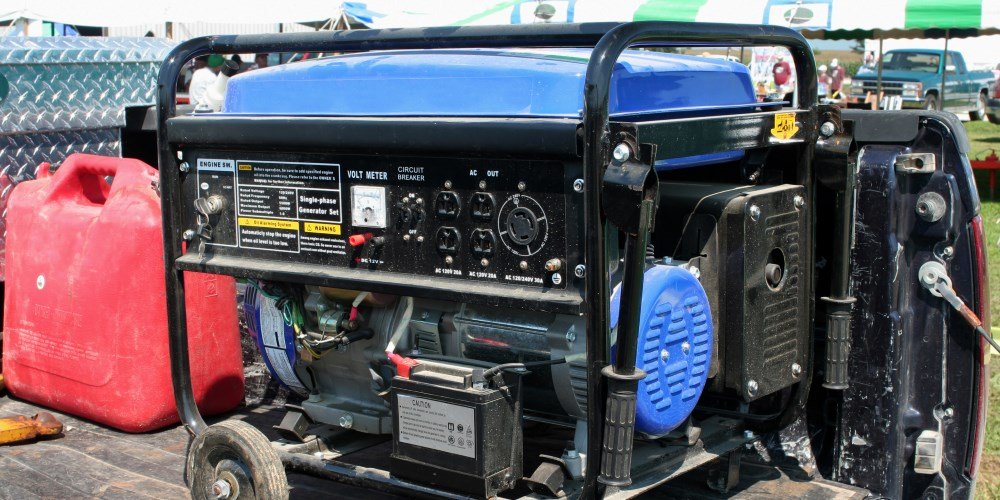
Power outages can strike without warning, leaving you in the dark, literally and figuratively. For many homeowners, a 5500-watt generator becomes a beacon of hope, capable of powering essential appliances and restoring a sense of normalcy. But wielding this power comes with a critical responsibility: ensuring the Safe Operation and Setup of 5500 Watt Generators. Neglecting proper procedures isn't just risky; it can be deadly, posing threats from carbon monoxide poisoning to electrocution. This guide will walk you through every crucial step, making sure you're not just powered up, but safely so.
At a Glance: Key Takeaways for Generator Safety
- Outdoor Only, 20 Feet Away: Always operate gasoline generators outdoors, at least 20 feet from your home, directing exhaust away from any openings.
- CO Detectors are Lifesavers: Install battery-powered carbon monoxide detectors on every level of your home and outside sleeping areas.
- No Backfeed! Never plug your generator directly into a wall outlet. Use a professional-installed transfer switch or interlock device for home connections.
- Proper Fueling: Only refuel a cooled-down generator. Store fuel in approved containers, outdoors.
- Right Cords for the Job: Use heavy-duty, outdoor-rated extension cords appropriate for the appliance's wattage and current.
- Mind Your Wattage: Understand running and starting watts to avoid overloading your 5500W generator.
- Modern Safety Matters: Consider newer generators with CO shutoff technology, but remember they don't replace proper placement.
Why Safety Isn't Optional: Understanding the Real Risks
Before we dive into the "how-to," let's be crystal clear about the stakes. Using a generator incorrectly can lead to two primary, life-threatening hazards: carbon monoxide (CO) poisoning and electrical backfeed. These aren't abstract dangers; they are frequent, fatal causes of generator-related incidents.
The Invisible Killer: Carbon Monoxide (CO) Poisoning
Carbon monoxide is an insidious gas. It's colorless, odorless, and tasteless, making it impossible to detect without specialized equipment. When a generator runs, it produces CO in its exhaust. If this exhaust enters your home, even through an open window or door, it can quickly build to toxic levels, leading to disorientation, nausea, and eventually, death. Hundreds of people die from generator-related CO poisoning every year. This is not a risk to take lightly.
The Shocking Truth: Electrical Backfeed
Imagine utility workers trying to restore power to your neighborhood during an outage. They assume the lines are dead. If you've improperly connected your generator directly into your home's electrical system (often called "backfeeding"), you could be sending high-voltage electricity onto the grid. This creates an immediate, severe electrocution hazard for those utility workers, your neighbors, and even members of your own household. It can also damage your home's wiring and the generator itself, and even start fires. This is why a proper transfer switch or interlock device is non-negotiable for direct home connections.
The Foundation of Safety: Setting Up Your Generator Right
Your generator's setup isn't just about getting power; it's about establishing a safe environment from the moment it starts. Do not take shortcuts here.
Choosing Your Generator's Sanctuary: CO Prevention in Practice
The single most critical step in preventing CO poisoning is where you operate your generator.
- Outdoors, Always: Your gasoline-powered portable generator belongs outside, no exceptions. This means no garages (even with the door open), no carports, no sheds, no basements, attics, or crawl spaces.
- The 20-Foot Rule: Place your generator a minimum of 20 feet (about two car lengths) from your house or any other structure. This distance helps ensure exhaust dissipates safely.
- Direct Exhaust Away: Position the generator so its exhaust is pointed away from your home's windows, doors, air conditioning units, or any other openings where fumes could drift inside. Opening windows or doors for "ventilation" is simply not enough.
- Stable Ground: Select a level, stable surface for operation. Driveways, stone patios, or firm patches of grass are generally suitable. Avoid soft ground where the generator could sink or tip.
- Rain or Shine Protection: If rain or snow is in the forecast, you absolutely must shield your generator from moisture. Wet generators can short circuit, causing electrical shock or damage. Invest in a purpose-built generator tent or cover designed to allow proper ventilation while protecting from the elements. Never operate a generator inside an enclosed area, even if covered, as this traps CO.
Wiring It Smart: Avoiding the Deadly "Backfeed"
Connecting your generator directly to your home's wiring is where the risk of backfeed comes in.
- The Golden Rule: Never "Backfeed": Do not, under any circumstances, plug your generator into a wall outlet in your home (often called "suicide cords"). This bypasses all safety mechanisms and creates an immediate backfeed risk.
- Transfer Switch or Interlock Device: The only safe, approved way to connect a portable generator to your home's electrical panel is through a professionally installed transfer switch or an interlock device.
- Transfer Switch: This is a dedicated panel that safely switches your home's power source between the utility grid and your generator. It automatically prevents your generator from sending power back into the utility lines.
- Interlock Device: This is a mechanical device installed on your main electrical panel that prevents the main breaker and the generator breaker from being on simultaneously. This ensures only one power source is active at a time, preventing backfeed.
- Hardwired Appliances: If you intend to power hardwired appliances like your furnace, well pump, or central air conditioner, a transfer switch is essential. Without it, you can only power appliances connected via extension cords directly to the generator's outlets.
Fueling Your Power Safely: Handling Gasoline
Gasoline is highly flammable and requires extreme caution.
- Approved Containers, Outdoors: Store gasoline in ANSI-approved, clearly labeled containers with pressure-relieving mechanisms. Keep these containers outdoors, away from living spaces and heat sources. Mixing fuel stabilizer with the gasoline can help extend its shelf life.
- Generators are Thirsty: Be prepared for significant fuel consumption. A 5500-watt generator will burn through fuel quickly under load. For instance, a medium-sized generator might consume 8 gallons of fuel in 9-15 hours, meaning continuous use over a few days could require 40 gallons or more. Plan your fuel needs accordingly.
- The Refueling Rule: Off and Cool: Never, ever fill a generator while it is running or hot. Spilled gasoline on a hot muffler or engine can instantly ignite, causing severe burns or an explosion. Always shut down the generator, allow it to cool completely, and then refuel.
- Consider Dual-Fuel Options: Some modern generators offer dual-fuel capabilities, allowing them to run on both gasoline and propane. Propane has a longer shelf life and can be stored more safely than gasoline. Conversion kits are also available for some models, but these typically require professional installation.
Cords That Connect, Not Kill: Proper Extension Cord Use
The right extension cords are your lifeline from the generator to your appliances. The wrong ones can be a fire or shock hazard.
- Consult Appliance Manuals: Always check your appliance owner's manuals for recommended extension cord gauges (thickness) and wattage ratings.
- Outdoor and Rated: Use only heavy-duty, outdoor-rated extension cords. Ensure the cord's maximum wattage rating is equal to or greater than the appliance's wattage requirement.
- Gauge Matters:
- Thicker (Lower Gauge) for High Current: For high-current appliances like portable heaters, larger window air conditioners, or sump pumps, use the thickest extension cords (lower gauge numbers, e.g., 10 or 12 gauge).
- Thinner (Higher Gauge) for Low Current: For low-current devices like laptops or small lamps, higher-gauge (thinner) cords (e.g., 14 or 16 gauge) are acceptable.
- One Cord, One Outlet (Mostly): For large appliances, dedicate one extension cord to one generator outlet. For smaller items, a power strip attached to a heavy-duty extension cord can be acceptable, but never overload the power strip or the cord.
- Avoid Serial Connections: Try to avoid connecting multiple extension cords in a series. If you must, ensure they are all the same gauge, as the effective capacity will be limited by the lowest gauge cord in the chain.
- Length vs. Voltage Drop: While longer cords can lead to a slight voltage drop, never place your generator closer than the recommended 20 feet from your home to compensate.
- No Pinches, No Rugs: Do not run extension cords under rugs, through windows, or pinched in doors. This can damage the cord's insulation, creating a fire or shock hazard. Use a rubber doorstop or similar mechanism to keep cords from being crimped in doorframes.
Unleashing the Power: What a 5500-Watt Generator Can Do (and Not Do)
A 5500-watt generator is a versatile workhorse, perfect for maintaining essential comforts during an outage. However, understanding its capacity is key to effective and safe operation. If you're looking to explore 5500 watt generators further, knowing their capabilities is the first step.
Understanding Your Generator's Muscle: Wattage Definitions
A generator's wattage indicates the maximum electrical load it can safely handle. A 5500-watt generator can supply up to 5500 watts of power. But not all watts are created equal:
- Running Wattage: This is the continuous power an appliance needs to operate once it's started.
- Starting Wattage (Surge Wattage): Many appliances, especially those with motors (like refrigerators, air conditioners, or pumps), require a momentary burst of much higher power to start up. This "surge" can be 2-3 times their running wattage.
When calculating your needs, you must account for both. Add up the running watts of all appliances you want to run simultaneously, then identify the single highest starting wattage among the appliances you plan to cycle on and off. The sum of your running watts plus that single highest starting wattage should not exceed your generator's total capacity.
Real-World Power: Common Appliances & Their Demands
A 5500-watt generator is typically sufficient for homes in the 1200 to 1750 square foot range, keeping crucial items running. Here’s a look at what you can expect to power:
| Appliance / Device | Running Wattage | Starting Wattage |
|---|---|---|
| Refrigerator / Freezer | 700W | 2100W |
| Window AC (10,000 BTU) | 1200W | 3600W |
| Microwave Oven | 1000W | 1000W |
| Sump Pump (1/2 HP) | 1050W | 2150W |
| Lights (10 x 60W bulbs) | 600W | 0W |
| Television (LED) | 150W | 0W |
| Laptop Computer | 50W | 0W |
| Washing Machine | 500W | 1500W |
| Coffee Maker | 1000W | 1000W |
| Electric Water Heater (40 Gal) | 4500W | 4500W |
| What a 5500W Generator Can Run (selectively): |
- Refrigerator/freezer
- Several lights
- Television & laptop
- Microwave (used intermittently)
- Coffee maker (used intermittently)
- Sump pump
- A window AC unit (10,000 BTU, if other high-draw items are off)
- Washing machine (used intermittently)
What a 5500W Generator Cannot Practically Run (or will struggle with): - Electric Water Heater: At 4500W, a typical 40-gallon electric water heater would consume most, if not all, of your 5500-watt generator's capacity, leaving little to no power for other essential appliances. It's generally impractical for a portable generator of this size.
- Welders: Most welders require significantly more power, often in the range of 9000W to 12000W. Attempting to run a welder on a 5500W generator will almost certainly overload and damage both the welder and the generator.
- Entire House: While powerful for its class, a 5500-watt generator cannot power an entire modern home simultaneously. You'll need to prioritize and manage loads carefully.
Mastering Your Load: Prioritizing & Staggering
To get the most out of your 5500-watt generator without overloading it:
- Prioritize Essentials: Make a list of your absolute must-haves (refrigerator, well pump, lights, critical medical devices).
- Calculate Total Running Watts: Add up the running watts of everything you want to run at the same time. This total should ideally be well below 5500W, leaving headroom.
- Account for Starting Watts: Identify the appliance with the highest starting wattage you plan to use.
- Stagger Start Times: Don't turn everything on at once. Start your refrigerator, wait a few minutes for it to settle into its running wattage, then turn on lights, and so on. This prevents multiple high-surge starts from tripping your generator's breaker or stalling the engine.
- Monitor Your Load: Listen to your generator. If it sounds strained or bogs down, you're likely nearing its limit. Many generators also have built-in meters to help you monitor current load.
Beyond the Initial Setup: Ongoing Safe Practices
Setting up your generator is just the beginning. Maintaining safe operation throughout an outage requires vigilance.
Weathering the Storm: Protecting Your Generator
Generators and moisture do not mix. Even though you operate it outdoors, it needs protection from rain, snow, and excessive dampness. As mentioned, a dedicated generator tent or cover is crucial. These are designed to allow proper airflow for cooling and exhaust while keeping the generator dry. Never cover a running generator with a tarp or anything that would impede ventilation and cause CO buildup or overheating.
The Silent Guardian: CO Detectors are Non-Negotiable
We've emphasized this, but it bears repeating: install working, battery-powered carbon monoxide detectors.
- Placement: Put them on each level of your home, and specifically outside bedroom areas.
- Maintenance: Test them monthly using the test button. Replace batteries regularly (e.g., when you change smoke detector batteries).
- Alarm Response: If a CO alarm sounds, immediately move everyone outdoors to fresh air and call 911 or your local emergency number. Do not re-enter until emergency responders say it's safe. Never ignore a CO alarm.
Keeping It Running Smoothly: Basic Maintenance & Longevity
Regular maintenance extends your generator's life and ensures it's ready when you need it.
- Read the Manual: Your generator's owner's manual is your best friend. It contains specific maintenance schedules and instructions.
- Oil Changes: Perform oil changes as recommended (often after the first 20-25 hours of operation, then every 50-100 hours).
- Air Filter: Clean or replace the air filter regularly, especially if operating in dusty conditions.
- Spark Plug: Inspect and replace the spark plug as needed.
- Fuel Stabilizer: Use fuel stabilizer if storing gasoline, and if the generator will sit unused for extended periods, drain the fuel system completely or run it dry.
- Test Runs: Run your generator periodically (e.g., every month or two) for 15-30 minutes under a light load. This keeps the engine lubricated and ensures it starts reliably when an actual outage occurs.
Smart Choices: Modern Generator Features & What to Look For
Generator technology is always improving, especially when it comes to safety.
CO Safety Technology: A Welcome Advancement
Consumer Reports now specifically recommends portable generators that pass rigorous CO safety technology testing. These newer models are designed to:
- Monitor CO Levels: They have sensors that detect dangerously high levels of carbon monoxide in the generator's exhaust path or the surrounding air.
- Automatic Shutoff: If CO levels become unsafe, these generators are engineered to automatically shut down.
- Important Caveat: While these features add a layer of protection, they are not a substitute for proper placement (20 feet outdoors, exhaust directed away) and the installation of CO detectors inside your home. They are a backup safety measure, not the primary one. If you're buying a new unit, prioritizing a generator with CO shutoff technology is a wise investment.
Quick Answers to Your Generator Questions
Let's tackle some common questions about 5500-watt generators.
Q: Can a 5500-watt generator power an entire house?
A: No, a 5500-watt generator cannot power an entire modern house simultaneously. It's designed to run essential appliances and provide critical power during an outage, requiring careful load management and prioritization.
Q: Are 5500-watt generators safe for sensitive electronics like computers?
A: Most modern 5500-watt generators produce "dirty power" with some Total Harmonic Distortion (THD), which can potentially harm sensitive electronics over time. For critical electronics, consider a generator with low THD (often labeled "inverter generator") or use a UPS (Uninterruptible Power Supply) and surge protector in conjunction with your standard generator.
Q: How loud is a 5500-watt generator?
A: Noise levels for a 5500-watt generator are typically around 70 decibels (dB) at 23 feet, which is comparable to a vacuum cleaner or a busy street. Some models may be slightly quieter or louder. Placement farther from living areas can help mitigate noise.
Q: How do I store my generator when not in use?
A: Always store your generator clean and dry, in a sheltered area away from your living space, such as a shed or garage. Ensure the fuel system is properly prepared for storage (either with stabilizer or drained, as per your manual) and consider a generator cover to protect it from dust and moisture.
Q: Do I need to ground my portable generator?
A: Most modern portable generators with GFCI (Ground-Fault Circuit Interrupter) outlets on their control panel are considered "floating neutral" systems and generally do not require external grounding for cord-and-plug connected appliances, according to OSHA. However, if you're connecting your generator to a transfer switch that grounds the generator's frame to your home's electrical system, or if your specific generator manual requires it, you should follow those instructions. When in doubt, consult a qualified electrician or your generator's manual.
Your Power Playbook: Final Thoughts on Safety & Preparedness
Operating a 5500-watt generator safely isn't complicated, but it demands respect for its power and potential hazards. By following these guidelines, you're not just preparing for an outage; you're investing in the safety of your home and loved ones.
Remember the core principles: outdoors, 20 feet away, CO detectors inside, no backfeed, and careful fueling. Take the time to set up your system correctly, understand your generator's capabilities, and perform regular maintenance. When the lights go out, your diligence will ensure that your generator isn't just a source of power, but a source of peace of mind. Stay prepared, stay safe.