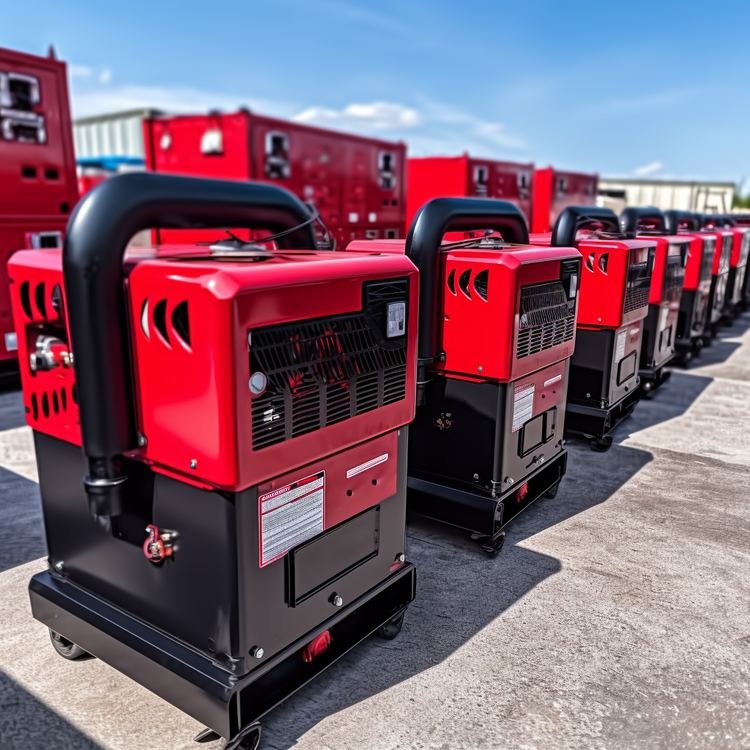
When the lights go out, the hum of a reliable generator can be the most comforting sound in the world. But choosing the right one can feel like deciphering a cryptic code of watts and amps. If you're looking for that sweet spot of power—enough to run essentials and then some, without breaking the bank or being overly bulky—then Understanding 5500 Watt Generators: Types, Uses, and Benefits is exactly what you need. This versatile workhorse offers a compelling blend of capability and convenience, making it a top contender for homeowners, adventurers, and pros alike.
At a Glance: Your 5500-Watt Generator Essentials
- The Power Punch: A 5500-watt generator typically provides around 4,500 continuous (running) watts and can handle a peak (surge) load of up to 5,500 watts.
- Sweet Spot: It's an ideal size for powering critical home appliances during an outage, running multiple tools on a job site, or supporting a comfortable RV or campsite setup.
- What It Runs: Easily handles refrigerators, freezers, microwaves, lights, TVs, and even a small portable air conditioner or space heater.
- Types: Primarily conventional (open-frame) generators, often available in gasoline, propane, or dual-fuel configurations.
- Key Benefits: Reliable backup power, impressive versatility, cost-effective operation (balancing output with fuel efficiency), and good portability.
- Maintenance Matters: Regular oil changes, air filter checks, and spark plug inspections are crucial for longevity.
- Smart Usage: Prioritize essential appliances, use heavy-duty cords, and always monitor your total load to prevent overloads.
What Does "5500 Watts" Really Mean? Demystifying Generator Power
Let's clear up the numbers game right away. When you see "5500 watts" advertised for a generator, that number usually refers to its surge wattage. This is the maximum power the generator can briefly supply to start motor-driven appliances like refrigerators, air conditioners, or power tools, which require a temporary burst of extra energy to kick on.
The more important number for day-to-day operation is the running wattage, which for a 5500-watt model, typically hovers around 4,500 watts. This is the continuous power your generator can produce safely and consistently. Think of it this way: the surge watts are like a quick sprint, while the running watts are the marathon pace your generator can maintain. Understanding this distinction is key to effectively planning what you can power.
Why a 5500-Watt Generator Might Be Your Sweet Spot
Choosing a generator often comes down to balancing power output, portability, cost, and fuel efficiency. A 5500-watt generator hits a remarkable sweet spot in this equation, offering substantial advantages without the bulk or fuel demands of much larger units.
For many homeowners, this size provides peace of mind. During a power outage, it’s robust enough to keep essential systems humming – your refrigerator protecting food, lights illuminating rooms, and perhaps even a portable AC or heater keeping you comfortable. It's often seen as the ideal middle ground for those who need more than just basic lights and device charging, but don't require enough power to run an entire large home seamlessly.
Moreover, its versatility extends far beyond emergency home backup. For outdoor enthusiasts, it’s a game-changer for extended camping trips or RVing, powering everything from microwaves to charging stations. On construction sites, it becomes an invaluable, portable power source for a variety of tools that might otherwise be inaccessible. This balance of power and practicality makes it a highly desirable option for a wide range of users looking for reliable energy wherever it's needed.
Powering Your World: What a 5500W Generator Can Handle
So, exactly what kind of impact can 4,500 running watts and 5,500 surge watts make? A significant one! This power output allows you to comfortably run a combination of essential household appliances, multiple power tools, or a solid setup for outdoor living. The trick is to be smart about what you plug in and when.
Your Essential Appliance Checklist
To give you a clearer picture, here's a list of common appliances and their typical wattage requirements. Remember, these are estimates, and checking your specific appliance's label is always best.
Household Essentials:
- Refrigerators: Running 200-800 watts, Surge 1,000-2,000 watts. (Crucial for food preservation)
- Freezers: Running 200-600 watts, Surge 1,000-1,500 watts. (Another food-saver)
- Microwave Oven: Running 600-1,200 watts, Surge 1,800-2,200 watts. (Quick meals)
- Coffee Maker: 600-1,200 watts. (Morning sanity!)
- Televisions: 50-400 watts. (Information and entertainment)
- LED Light Bulbs: 10-20 watts each.
- Incandescent Light Bulbs: 60-100 watts each.
- Small Air Conditioners (portable): Running 1,200-1,500 watts, Surge 2,000-3,000 watts. (You can often run up to three portable units, depending on what else is connected).
- Space Heaters: 750-1,500 watts (Ceramic, Infrared, Oil-Filled Radiators are compatible).
- Washing Machine: Running 400-1,200 watts, Surge 1,200-2,000 watts.
Home Office & Connectivity: - Wi-Fi Routers: 10-15 watts.
- Laptops: 50-100 watts.
- Desktop Computers: 200-300 watts.
- Gaming Consoles: 100-250 watts.
Security & Safety: - Security Cameras: 5-15 watts each.
- Alarm Systems: 15-20 watts each.
- Motion Detectors: 1-5 watts each.
Outdoor & Power Tools: - Power Tools (drills, saws, sanders): 500-1,800 watts each. Multiple tools can often be used simultaneously, as long as you manage the total load.
- Electric Lawn Mowers: Approximately 1,500 watts.
Calculating Your Power Needs: A Step-by-Step Guide
To ensure you don't overload your generator and cause it to shut down (or worse, damage it), a little planning goes a long way.
- List Your Essentials: Begin by listing every device you absolutely need to run simultaneously during a power outage or on a job site. Be realistic!
- Find the Wattage: Check the wattage ratings on the labels or in the manuals for each of these devices. Look for both "running watts" and "starting/surge watts" if available.
- Sum the Running Watts: Add up the running wattages for all the appliances you want to use at the same time. This total should not exceed your generator's 4,500 running watts capacity.
- Account for Surge Loads: For any motor-driven appliances (like refrigerators, freezers, microwaves, or power tools), note their surge wattage. While you won't be adding all surge wattages together, you must ensure that your single largest surge load, combined with the running watts of everything else that's already on, doesn't exceed the generator's 5,500-watt surge capacity. Most generators can only handle one major surge at a time.
For example, if you're running lights (100W), a Wi-Fi router (15W), and a laptop (60W), your continuous load is 175W. If your refrigerator (200W running, 1500W surge) then kicks on, the generator needs to supply 175W + 200W + 1500W = 1875W for a brief moment. This is well within a 5500-watt generator's capacity. The critical mistake is often trying to start two or three large motor-driven appliances at the exact same moment.
Beyond the Outage: Versatile Uses for Your 5500W Generator
While emergency backup is a primary use, a 5500-watt generator is a true multi-tool, proving its worth in a variety of scenarios. Its balanced power output makes it incredibly adaptable.
Home Backup: Keeping the Lights On (and Fridge Cold)
This is where the 5500-watt generator shines for most homeowners. It’s perfect for ensuring essential appliances remain operational during unexpected grid failures. Think about the peace of mind knowing your food won't spoil, your sump pump will keep the basement dry, and you can stay connected to the outside world. It's not about powering every single gadget, but rather maintaining functionality and comfort when the unexpected happens.
Outdoor Adventures: Powering Your Campsite or RV
For those who love the great outdoors but aren't keen on roughing it entirely, a 5500-watt generator transforms camping and RV trips. It can power appliances inside your RV, from the microwave and coffee maker to a small air conditioner or heater. For car camping, it provides electricity for lights, charging stations for devices, and even portable cooking equipment. It ensures that your adventure doesn't come with a complete sacrifice of modern conveniences.
Job Sites: The Portable Workhorse
Construction crews, contractors, and DIY enthusiasts will find a 5500-watt generator indispensable on job sites where grid power is either unavailable or inconvenient. It can simultaneously run multiple power tools like circular saws, drills, air compressors, and grinders. Its robust output handles the surge requirements of these motor-driven tools, significantly boosting productivity and extending work capabilities in remote locations.
Types of 5500-Watt Generators: Fueling Your Needs
While the wattage might be fixed, 5500-watt generators come with variations, primarily in their fuel type and engine configuration. Understanding these differences helps you select the best fit for your specific requirements.
Conventional (Open-Frame) Generators
Most 5500-watt generators you'll encounter are conventional, open-frame models. These are typically more affordable per watt than inverter generators, robust, and designed for heavy-duty use. They're characterized by their exposed engine and alternator, often featuring a sturdy frame with wheels and handles for portability. While they tend to be louder than inverter models, their reliability and raw power make them a popular choice for emergency backup and job site applications.
Fuel Types: Choosing Your Power Source
The type of fuel your generator uses directly impacts its efficiency, runtime, and the convenience of refueling.
- Gasoline: This is the most common fuel type. Gasoline generators are readily available, generally less expensive upfront, and gasoline is easy to find. However, gasoline has a shorter shelf life and can be less fuel-efficient than other options. Most 5500-watt gasoline generators with a 5-gallon tank can run for 10-12 hours at a 50% load.
- Propane (LPG): Propane offers a longer shelf life, burns cleaner, and is safer to store than gasoline. Propane tanks are easily swapped out, meaning you don't have to refuel on the go. While propane might be slightly less fuel-efficient by volume than gasoline, its clean burn extends engine life and reduces maintenance needs.
- Dual-Fuel: These versatile generators can run on either gasoline or propane, giving you flexibility. This is a huge advantage, as you can switch fuels based on availability or preference, ensuring you're never left without power if one fuel source is scarce. For example, different generator fuel types offer unique advantages depending on your situation.
- Diesel: While less common in the 5500-watt portable class, diesel generators are known for their exceptional fuel efficiency, durability, and longer lifespan. Diesel fuel is safer to store and less flammable than gasoline. However, diesel generators are generally more expensive and heavier.
Maximizing Performance & Extending Lifespan: Maintenance & Care
A generator is an investment in your peace of mind and productivity. Like any engine, it thrives on regular care. Neglecting maintenance not only shortens its lifespan but can also lead to costly repairs or, worse, failure when you need it most. Following a simple maintenance schedule is key to ensuring your 5500-watt generator provides reliable power for years to come. For instance, understanding essential generator maintenance tips can save you significant hassle.
Fuel Matters: Quality In, Power Out
The fuel you put into your generator is paramount.
- Use Clean, High-Quality Fuel: Always use fresh fuel appropriate for your generator type. Stale gasoline can gum up carburetors and fuel lines.
- Fuel Stabilizer: If you're not using your generator frequently, add a fuel stabilizer to gasoline to prevent degradation during storage.
- Regular Filter Checks: Inspect and replace the fuel filter periodically. A clogged filter restricts fuel flow, reducing performance and potentially damaging the engine.
The Maintenance Schedule: Your Generator's Best Friend
Regular check-ups are non-negotiable for optimal performance and longevity.
- Change Oil: This is perhaps the most critical maintenance task. Consult your owner's manual for the recommended oil type and change intervals (typically after the first 20-25 hours of operation, then every 50-100 hours or annually).
- Clean/Replace Air Filters: A dirty air filter chokes the engine, reducing efficiency and increasing wear. Clean or replace it regularly, especially if operating in dusty environments.
- Inspect/Replace Spark Plugs: Spark plugs are vital for ignition. Check them for wear and fouling, and replace them as recommended by the manufacturer, usually every 100-300 hours.
- Keep it Clean: Regularly wipe down the exterior of your generator. Dirt, debris, and grime can hinder cooling and lead to premature wear.
- Proper Storage: When not in use, store your generator in a dry, well-ventilated area, protected from the elements. If storing for an extended period, drain the fuel or run the engine dry to prevent fuel-related issues.
Load Management: Smart Power Usage
Even with a robust 5500-watt generator, smart load management can significantly impact its performance and longevity.
- Stagger High-Wattage Appliances: Avoid plugging in and starting all your heavy-duty appliances at once. Turn on the refrigerator, wait a few minutes, then the microwave, and so on. This prevents overloading the generator's surge capacity.
- Monitor Total Load: While you can estimate, investing in a power meter (discussed below) provides real-time data on how much power your devices are drawing.
Environmental Factors: Altitude & Temperature
Don't forget that your generator's output isn't constant across all conditions.
- Altitude: Operating at high altitudes can reduce a generator's power output by approximately 3.5% for every 1,000 feet above sea level. This is because the air is thinner, reducing engine efficiency.
- Extreme Temperatures: Both extremely hot and cold temperatures can affect a generator's performance and starting ability. Ensure adequate ventilation in hot weather and consider a cold-weather kit for freezing conditions.
Runtime Reality: How Long Can You Expect Power?
Understanding how long your generator will run on a single tank of fuel is crucial for planning, especially during extended outages. For a 5500-watt generator equipped with a standard 5-gallon gasoline tank, you can generally expect a runtime of 10-12 hours at a 50% load.
What does "50% load" mean in practice? It means you're continuously drawing approximately 2,250 watts. This could translate to running your refrigerator, some lights, your Wi-Fi router, and occasionally cycling a microwave or a small space heater. As you increase the load, the fuel consumption will rise, and the runtime will decrease. Conversely, running fewer appliances will extend your operational time. This makes the 5500-watt model quite efficient for essential use over prolonged periods.
Smart Usage: Practical Tips for Every Generator Owner
Even the best generator needs a savvy operator. Here are some indispensable tips to ensure safe, efficient, and reliable power.
Prioritize Essential Devices During Outages
When the grid goes down, resist the urge to power everything at once. Focus on the absolute necessities first: refrigeration, critical medical devices, lights, and communication tools. Once these are stable, you can gradually add other appliances, carefully monitoring your generator's load. Thinking through this hierarchy beforehand will make a chaotic situation much smoother.
The Power Meter Advantage
While our wattage guide gives you good estimates, appliance wattage can vary. Invest in a simple, inexpensive power meter (often called a Kill A Watt meter) that plugs into an outlet. You can then plug your appliances into it to get precise running and surge wattage readings. This eliminates guesswork and empowers you to accurately properly size a generator for your home or manage your existing one.
Heavy-Duty Extension Cords Are Non-Negotiable
Never skimp on extension cords. Using undersized or damaged cords can lead to voltage drop, overheating, and fire hazards. Always opt for heavy-duty, outdoor-rated extension cords (typically 12-gauge or thicker for longer runs) specifically designed for generator use. The longer the cord, the thicker it needs to be to prevent power loss.
Don't Overload It!
This cannot be stressed enough. Continuously running your generator at or above its maximum running wattage can cause overheating, premature wear, and even permanent damage. Most generators have built-in circuit breakers that will trip if overloaded, but repeated overloads are detrimental. Stick to that 4,500 running watt guideline, and manage your surge loads carefully. Running a generator optimally extends its life, as discussed in our 5500 watt generator guide.
Safety First: Ventilation and Carbon Monoxide
Always operate generators outdoors, far away from windows, doors, and vents to prevent carbon monoxide poisoning. CO is an odorless, colorless gas that can be fatal. Install battery-operated CO detectors in your home for added safety. Never run a generator in a garage, even with the door open.
Common Questions About 5500-Watt Generators
Let's address some of the most frequently asked questions that arise when considering or owning a 5500-watt generator.
Is a 5500W generator enough for a whole house?
For essential circuits and appliances in an average home, yes, a 5500-watt generator can be sufficient. It's designed to prioritize critical loads like your refrigerator, freezer, a few lights, furnace fan, and communication devices. It won't power every single appliance simultaneously (like your central AC, electric dryer, or electric stove), but it will keep your home functional and comfortable during an outage. For larger homes or those requiring more extensive power, a transfer switch setup is often recommended to isolate specific circuits.
What's the difference between running watts and surge watts?
- Running watts (or continuous watts) is the steady power an appliance needs to operate once it's on. For a 5500W generator, this is typically 4,500 watts.
- Surge watts (or starting watts) is the extra burst of power a motor-driven appliance (like a refrigerator, AC, or power tool) needs for a few seconds to start up. For a 5500W generator, this is the maximum 5,500 watts. You primarily sum running watts, but must account for the largest single surge watt demand when starting motor-driven devices.
How often should I run my generator for maintenance?
It's generally recommended to run your generator for about 20-30 minutes once a month. This "exercise" helps keep the engine components lubricated, prevents fuel from stagnating in the carburetor (if using gasoline), and ensures the battery (if it has electric start) stays charged. It's a quick, easy way to confirm it's ready when you need it most.
Can I run my generator in the rain?
No, you should never operate a generator directly in the rain or wet conditions unless it is specifically designed and rated for such conditions (which most portable consumer models are not). Water and electricity are a dangerous combination. Always ensure your generator is protected from moisture by using a generator tent, an open-sided shelter, or placing it under an overhang, ensuring proper ventilation is maintained to prevent carbon monoxide buildup.
Making the Right Choice: Your Path to Reliable Power
Deciding on a 5500-watt generator means you're investing in reliability, versatility, and peace of mind. By now, you should have a clear understanding of its capabilities, how to calculate your power needs, and the importance of proper maintenance and safe operation.
Whether you're preparing for the next big storm, embarking on an off-grid adventure, or powering a remote project, a 5500-watt generator offers a robust solution that balances performance with practical usability. Take the time to assess your specific power requirements, consider the fuel type that best suits your needs, and commit to a consistent maintenance schedule. With these steps, your 5500-watt generator will be a trusted companion, ready to deliver dependable power whenever and wherever you need it most.
Untuk pemahaman lebih lengkap, baca panduan utama kami: our 5500 watt generator guide