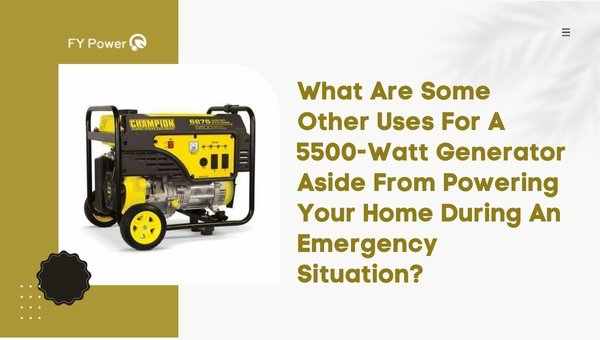
In a world increasingly reliant on electricity, the sudden silence of a power outage can feel jarring. No lights, no fridge, no internet—the modern home grinds to a halt. That's where a reliable backup power source, like a 5500-watt generator, becomes not just a convenience, but a critical tool for maintaining comfort and safety. This guide isn't just about watts and amps; it's about empowering you to choose, use, and maintain your generator confidently, ensuring your home stays powered when the grid goes dark.
A 5500-watt generator strikes a powerful balance, offering enough juice to keep essential appliances humming without the bulk or cost of a whole-home standby system. Whether it's a storm knocking out power, a remote cabin getaway, or even a demanding DIY project, understanding what this workhorse can do (and how to use it safely) is your first step toward true energy independence.
At a Glance: Your 5500-Watt Generator Essentials
- What it is: A generator providing 5500 consistent "running watts" and typically 6500-7000 "starting watts" for those initial power surges.
- What it powers: Essential household appliances like refrigerators, microwaves, small AC units, TVs, lights, and common power tools.
- What it can't do: It won't power an entire large home simultaneously or most central air conditioning systems.
- Key benefit: A versatile, cost-effective, and often portable solution for reliable backup power during emergencies.
- Safety first: Always operate outdoors to prevent carbon monoxide poisoning and use a transfer switch for home connections.
- Maintenance matters: Regular oil changes, clean filters, and proper fuel are crucial for longevity and performance.
Unpacking Your Power Needs: How to Calculate What You'll Run
Before you even think about plugging anything in, you need to understand your power demands. This isn't just guesswork; it's a precise calculation that ensures your generator can handle the load without tripping breakers or, worse, damaging appliances. Every electrical device has specific power requirements, broken down into two crucial figures: running watts and starting watts.
- Wattage: This is the universal measure of electrical power. It tells you how much juice an appliance consumes or how much a generator can supply.
- Running Watts: Think of this as the steady, continuous power an appliance needs to operate once it's already started. A "5500-watt generator" specifically refers to its running watt capacity—the power it can reliably provide over an extended period.
- Starting Watts (or Surge Watts): Many appliances, especially those with motors (like refrigerators, air conditioners, or pumps), demand a momentary burst of extra power to kickstart. This surge can be significantly higher than their running wattage. Your generator needs to be able to meet this highest individual starting wattage on top of everything else running. A 5500-watt running generator typically boasts 6500-7000 surge watts to handle these initial power spikes.
The 5-Step Power Calculation Process
To effectively plan your backup power, follow these steps to tally up your home's needs:
- List Your Essentials: Jot down every single device you plan to power during an outage. Be realistic, focusing on absolute necessities first.
- Find the Wattage Ratings: For each item on your list, locate its running and starting wattage. This information is usually on a label (often on the back or bottom of the appliance), in the owner's manual, or on the manufacturer's website.
- Sum Your Running Watts: Add up all the running wattages from your list. This total represents the continuous power your generator must supply. Crucially, this sum must be less than your generator's 5500 running watts.
- Identify the Heaviest Starter: Look through your list and find the single appliance with the highest starting wattage. This is the biggest "power gulp" your generator will face.
- Calculate Total Starting Watts Needed: Add the highest individual starting wattage (from step 4) to your total running watts (from step 3). This grand total represents the minimum starting watts your generator needs to provide to get everything running.
Let's Walk Through an Example:
Imagine you need to power:
- Refrigerator: 700W run, 1200W start
- Small AC: 1200W run, 3600W start
- TV: 85W run, 85W start
- Laptop: 50W run, 50W start
- Toaster: 850W run, 850W start
Here's how the calculation plays out: - Total Running Watts: 700 (Fridge) + 1200 (AC) + 85 (TV) + 50 (Laptop) + 850 (Toaster) = 2885W
- (Good news: 2885W is well below the 5500W running capacity of your generator.)
- Highest Individual Starting Wattage: The small AC unit, at 3600W.
- Required Generator Starting Watts: 2885W (Total Running) + 3600W (Highest Start) = 6485W
- (Excellent: A typical 5500-watt generator offers 6500-7000 starting watts, so 6485W falls comfortably within its surge capacity.)
What if wattage isn't provided? Don't sweat it. You can often find amperage (A) and voltage (V) ratings. Use this simple formula: - Watts (W or kW) = Volts (V) x Amps (A)
- (Conversely, Amps (A) = Watts (W or kW) / Volts (V))
This straightforward process ensures you're not guessing, but confidently matching your power needs to your generator's capabilities.
What Can a 5500-Watt Generator Power for Your Home?
A 5500-watt generator is a robust machine, capable of handling a significant portion of your essential household needs during an outage. While it won't power your entire mansion with all appliances humming simultaneously, it can certainly keep life comfortable and functional.
Here’s a breakdown of what you can typically expect to run:
Kitchen Comforts
The kitchen often takes priority during an outage. A 5500-watt unit can power several critical appliances:
- Refrigerator/Freezer: 300-800 watts (run), with surges around 800-1200 watts. You can keep your food fresh.
- Microwave: 800-1200 watts. Perfect for quick meals or heating water.
- Coffee Maker: 600-1200 watts. Your morning routine doesn't have to suffer.
- Toaster: 850 watts.
- Pressure Cooker: 700 watts.
- Espresso Machine: 1,300 watts.
- Note: A dishwasher (1,500W) can run, but you'll need to prioritize it, as it uses a fair amount of power. An electric water heater (4,000W) is generally too much for a 5500W unit on its own, let alone with other appliances.
Staying Comfortable: Heating & Cooling
Managing temperature is crucial, especially in extreme weather.
- Small Air Conditioner: A window unit (e.g., 10,000 BTU) typically uses 1,200-1500 watts. You could potentially run one, or even two or three portable AC units, depending on their individual draw and what else is running.
- Space Heaters: Ceramic, infrared, or oil-filled radiators (around 1,800 watts for a medium unit) are all compatible. Prioritize one or two to warm specific rooms.
- Small Heating System: If your furnace fan motor is around 500 watts, it's often manageable.
Entertainment & Communication
Keeping connected and entertained is vital for morale.
- Television: 85-300 watts.
- Gaming Consoles: 100-250 watts.
- Wi-Fi Router: 10-15 watts. Essential for internet access (if your ISP's infrastructure is still up).
- Laptop: 50-100 watts.
- Desktop Computer: 200-300 watts.
- VCR/DVD Player: 100 watts.
- Ceiling Fan: 60 watts.
Home Maintenance & Tools
For those DIY projects or urgent repairs, your generator has you covered.
- Power Tools: Drills, saws, sanders (typically under 2000 watts each). You can often run a couple simultaneously. A hammer drill might draw 1,000W, a bench grinder 1,400W, or a radial arm saw 2,000W.
- Electric Lawn Mowers: Around 1500 watts.
- Vacuum Cleaner: 200 watts.
- Air Compressor (1 HP): 1,600 running watts, 4,500 starting watts. This one needs careful planning due to its high surge.
Water & Safety
Ensuring access to water and maintaining security are top priorities.
- Small Well Pump (1/2 HP): 1,000 running watts, 2,100 starting watts. Critical for homes relying on well water.
- Sump Pump (1/2 HP): 1,050 running watts, 2,150 starting watts. Essential for flood prevention. Note: Some larger pumps may require a 240V outlet, which many 5500W generators provide.
- LED Lights: ~10 watts each. You could power hundreds of these!
- Security Cameras: 5-15 watts each.
- Alarm Systems: 15-20 watts each.
- Motion Detectors: 1-5 watts each.
Important Limitations: What Your 5500W Generator Cannot Do
While highly capable, a 5500-watt generator has its limits:
- Whole-House Power: It simply doesn't have the capacity to run an entire, modern home simultaneously. Running every light, appliance, and HVAC system will overwhelm it. For whole-house power, you'd typically need a much larger, dedicated standby generator.
- Central Air Conditioning: Most central AC units have extremely high starting wattages (often 5000-8000+ watts for even smaller units), making them very challenging, if not impossible, for a 5500-watt portable generator to start and run. Stick to window units or portable ACs for cooling.
- Large Electric Water Heaters or Ovens: These appliances are significant power hogs and are generally off-limits for a 5500-watt generator.
The key is to prioritize. A 5500-watt generator excels at providing focused power for your most critical needs, making outages far more manageable. For those looking to understand more about specific models and their capabilities, you can always learn more about 5500 watt generators and find the perfect fit for your home.
Beyond the Blackout: The Versatility and Value of a 5500-Watt Unit
While home backup is the primary focus for many, the utility of a 5500-watt generator extends far beyond just emergencies. This power-packed unit offers a compelling blend of benefits that make it a smart investment for diverse scenarios.
- Reliable Power, On Demand: Its core benefit remains steadfast: delivering consistent, dependable electricity when the grid fails. This peace of mind is invaluable during severe weather events or unexpected utility disruptions.
- Unmatched Versatility: A 5500-watt generator isn't a one-trick pony.
- Home Use: Beyond blackouts, it can power tools for home improvement projects in areas without accessible outlets.
- Campsites & RVs: Elevate your outdoor adventures with power for lights, small appliances, and electronics, transforming rustic camping into "glamping."
- Job Sites: For contractors and tradespeople, it's a mobile power station, running multiple power tools simultaneously, boosting productivity where grid power isn't available or reliable.
- Cost-Effectiveness: Compared to permanently installed whole-house standby generators, a portable 5500-watt unit is significantly more affordable upfront. It offers an excellent balance between power output and fuel efficiency, meaning you get substantial backup capacity without breaking the bank on purchase or operation.
- Portability & Convenience: Many 5500-watt models are designed with portability in mind, featuring sturdy wheels and convenient folding handles. This makes them relatively easy to move from storage to the operating location, or even to load into a truck for off-site use. Their design often means they require less complex installation than larger units, offering a more immediate power solution.
Investing in a 5500-watt generator means investing in flexibility and resilience, empowering you to tackle power needs whether they arise from an unforeseen emergency or a planned activity.
Keeping the Lights On: Performance & Maintenance Essentials
A generator is an investment, and like any valuable machine, it thrives on proper care. Regular maintenance not only extends its lifespan but also ensures it performs reliably when you need it most.
Fueling Efficiency and Longevity
Fuel is the lifeblood of your generator. How you manage it directly impacts performance and run time.
- Choose Wisely: Always use clean, high-quality, fresh fuel. Stale or contaminated fuel is a common culprit for generator failures. For gasoline generators, consider a fuel stabilizer if you plan to store fuel for longer than a month or two.
- Check Filters: Regularly inspect and replace the fuel filter. A clogged filter restricts fuel flow, reducing efficiency and potentially stalling the engine.
- Dual Fuel Advantage: Many modern generators offer dual-fuel capability (gasoline and propane). Propane generally has a longer shelf life, burns cleaner, and can be a convenient alternative, especially during power outages where gasoline might be scarce.
- Understanding Run Time: Your 5500-watt generator's run time varies significantly based on its fuel tank size and the load it's carrying. Many models will run for 8-12 hours on a single tank at a 50% load. For example, a Westinghouse WGen5500 with a 6.6-gallon tank can run for approximately 15 hours at a 50% load, offering substantial duration for extended outages.
Essential Maintenance Tips
Think of these as the fundamental health checks for your generator:
- Oil Changes: This is arguably the most critical maintenance task. Consult your owner's manual for the recommended schedule (often after the first 20-30 hours, then every 100-200 hours of operation). Use the correct oil type:
- For 4-stroke gasoline engines, SAE 30 is generally recommended for warmer climates, while SAE 10W-30 is better for colder temperatures.
- Air Filter Cleaning/Replacement: A clean air filter ensures proper airflow to the engine, which is vital for efficient combustion. Check it regularly and clean or replace it as needed, especially if operating in dusty conditions.
- Spark Plug Inspection: The spark plug is essential for ignition. Inspect it for signs of wear or carbon buildup. Clean it with a wire brush or replace it annually, or as recommended by the manufacturer.
- Keep it Clean and Dry: Dust, dirt, and moisture are enemies of generator components. Keep the unit clean and store it in a dry, protected area to prevent corrosion and overheating.
- Fuel Shut-off: Always use the manual fuel-shutoff switch/valve (if equipped) and run the carburetor dry before long-term storage. This prevents fuel from gumming up the carburetor, a common issue when generators sit idle.
- Exercise Your Generator: Even if you don't have an outage, start your generator once a month and let it run under a light load for 15-30 minutes. This circulates fluids, lubricates components, and helps you identify potential issues before an emergency.
Adhering to a consistent maintenance schedule ensures your 5500-watt generator remains a reliable guardian against power disruptions, ready to spring into action whenever called upon.
Understanding the Current: Amperage Output Explained
While watts tell you the total power, amperage tells you the flow of electricity. Understanding amperage (amps) is crucial because your generator's outlets and your home's circuits are rated for specific amp limits. Exceeding these limits can trip breakers, or worse, damage your generator or appliances.
A 5500-watt generator can provide approximately:
- 45 amps at 120 volts: This is typical for most household outlets and many common appliances.
- 23 amps at 240 volts: Higher voltage is needed for larger appliances like well pumps, sump pumps, or some heavy-duty tools.
Knowing these figures helps you plan which outlets to use for which devices, especially if you're connecting appliances that draw significant current. Many generators come with multiple outlet types, including standard 120V outlets and a 30-amp, 240V twist-lock outlet, designed for heavier loads and connection to a transfer switch.
Amperage Conversion Cheat Sheet
Here’s a quick reference to convert common wattages to amps at both 120V and 240V:
| Wattage (W) | Amps (120V) | Amps (240V) |
|---|---|---|
| 500W | 4.2A | 2.1A |
| 1000W | 8.3A | 4.2A |
| 2000W | 16.7A | 8.3A |
| 3000W | 25.0A | 12.5A |
| 4000W | 33.3A | 16.7A |
| 5000W | 41.7A | 20.8A |
| 5500W | 45.8A | 22.9A |
| 6000W | 50.0A | 25.0A |
| This table serves as a handy guide when you're connecting devices and want to ensure you're not overloading a specific circuit or outlet on your generator. Always check the amperage rating of your extension cords and appliance plugs to ensure they can handle the current being drawn. |
Choosing Your Generator: Inverter vs. Standard
When looking at 5500-watt generators, you'll primarily encounter two main types: traditional (or conventional) generators and inverter generators. While both produce electricity, they do so differently, with distinct advantages and disadvantages. Your choice hinges on your priorities—power quality, noise, portability, and budget.
Standard (Traditional) Generators
These are the workhorses most people picture when they think of a generator.
- How They Work: A standard generator's engine runs at a constant speed (typically 3600 RPM) to produce a fixed alternating current (AC) frequency (60 Hz in North America).
- Pros:
- Higher Wattage, Lower Cost: Often provide more raw power at a lower purchase price per watt compared to inverters.
- Simpler Technology: Generally less complex, which can mean potentially cheaper repairs for certain issues (though modern engines are all complex).
- Cons:
- "Dirty Power": Produce power with higher Total Harmonic Distortion (THD), meaning the electrical waveform isn't as clean or smooth. This can be problematic for sensitive electronics like laptops, smartphones, and certain medical devices, potentially causing damage or malfunction.
- Noisier: Because the engine always runs at full speed, they are considerably louder.
- Less Fuel-Efficient: They consume more fuel because the engine doesn't adjust its speed based on the load.
- Heavier & Bulkier: Typically larger and heavier, making them less portable.
Inverter Generators
Inverter technology is a more modern approach to portable power.
- How They Work: The engine first produces AC power, then converts it to DC, and finally "inverts" it back to clean AC power. This multi-step process results in a much smoother, consistent electrical current.
- Pros:
- "Clean Power": Produce power with significantly lower THD (usually <3%), making them perfectly safe for all sensitive electronics.
- Quieter Operation: The engine's speed automatically adjusts to the power demand, meaning it can run slower and much quieter when powering fewer items.
- More Fuel-Efficient: The variable engine speed also translates to less fuel consumption, extending run times and saving on operating costs.
- Lighter & Smaller: Generally more compact and lighter, enhancing portability.
- Parallel Capability: Many models can be linked together (paralleled) with another inverter generator to double the power output when needed.
- Cons:
- Higher Cost: Inverter generators are typically more expensive upfront.
- Lower Maximum Output (Historically): While 5500-watt inverters exist, historically they topped out at lower wattages. Larger inverter units can still be found but might be pricier.
- Costly Repairs: The advanced electronics can make repairs more expensive if something goes wrong.
Which is right for you? If you prioritize running sensitive electronics, desire quiet operation, and value fuel efficiency, an inverter generator is the superior choice, provided it meets your wattage needs and budget. If your primary goal is to power tools, appliances with motors, and lights without sensitive electronics, and you're willing to tolerate more noise and fuel consumption for a lower upfront cost, a standard generator might suffice.
Smart Features for Smart Power: What to Look For
Beyond the basic wattage and generator type, a host of features can significantly enhance the usability, safety, and convenience of your 5500-watt home backup generator.
Essential Features for Home Use
When you're facing an outage, ease of use and reliability are paramount. Look for these features:
- Alternative Fuel Source (Dual Fuel): A generator that runs on both gasoline and propane offers immense flexibility. Propane stores longer and can be easier to acquire during fuel shortages.
- Electric Start with Manual Recoil Backup: An electric start makes getting your generator going simple, especially in cold weather. A manual recoil start is a vital backup in case the battery dies.
- Maintenance-Free Electric Battery with Trickle Charger: This ensures your electric start battery is always topped off and ready.
- Built-in Inverter or Automatic Voltage Regulation (AVR): An inverter provides "clean power" for sensitive electronics (as discussed above). If it's a standard generator, AVR helps stabilize voltage, offering some protection against power fluctuations.
- Automatic Idle Control (Eco-Mode): This feature automatically adjusts the engine speed to match the load, saving fuel and reducing noise when less power is needed.
- Durable Frame and Steel Fuel Tank: These indicate robust construction, vital for longevity and safety, especially if the generator is moved frequently.
- Fuel Gauge and Low-Oil Shutoff: A fuel gauge helps you monitor consumption, preventing unexpected shutdowns. A low-oil shutoff automatically turns off the engine if oil levels drop too low, protecting it from severe damage.
- Manual Fuel-Shutoff Switch/Valve: Crucial for safely running the carburetor dry before storage, preventing clogs.
- Longer Run Time: A larger fuel tank generally means longer operation between refills, which is a huge convenience during extended outages.
- OHV (Overhead Valve) Engine: These engines are known for their efficiency, power, and durability.
- Spark Arrestor: Required if you plan to use your generator in forested areas or near any combustible materials, as it prevents sparks from escaping the exhaust.
- Multiple Outlet Types with Covers: Ensure your generator has a variety of outlets to match your needs, including standard 120V receptacles and at least one 30-amp outlet (often a 120/240V twist-lock) for heavier loads or connection to a transfer switch. Covers protect outlets from dirt and moisture.
- Folding Handles with a Wheel Kit: Essential for portability, making it easy to move the generator around your property or load it for transport.
These thoughtful features can transform your generator from a mere power source into a truly reliable and user-friendly home backup solution.
Safety First, Always: Non-Negotiable Rules for Generator Operation
Operating a generator involves powerful machinery and combustible fuels, so safety can never be an afterthought. Ignoring proper procedures can lead to serious injury, carbon monoxide poisoning, or even death. Prioritize these critical precautions:
The Golden Rule: Never Indoors!
- Carbon Monoxide (CO) Kills: Generators produce exhaust fumes rich in carbon monoxide, an odorless, colorless, and deadly gas. NEVER operate a generator inside your home, garage, basement, shed, or any partially enclosed space. Open windows or doors are not sufficient ventilation to prevent CO buildup.
- Outdoor Placement: Always place your generator outdoors, at least 20 feet away from your home's windows, doors, and vents, pointed away from occupied buildings. This ensures exhaust fumes dissipate safely into the open air.
- CO Detectors: Install battery-operated carbon monoxide detectors in your home, especially near sleeping areas, and test them regularly. This provides an essential layer of protection in case fumes somehow enter your living space.
Preventing "Backfeeding": Use a Transfer Switch
- Never Connect Directly to Your Home's Electrical System: Plugging your generator directly into a wall outlet (known as "backfeeding") is extremely dangerous. It can send power back through the utility lines, potentially electrocuting utility workers who are trying to restore power.
- The Transfer Switch Solution: To safely power your home's circuits, you must have a properly installed manual transfer switch or an interlock kit. This device, installed by a qualified, licensed electrician, creates a safe disconnect from the utility grid before connecting your generator, ensuring power flows only into your home, not back into the grid.
Safe Electrical Connections
- Direct Plug-In or Heavy-Duty Cords: Plug appliances directly into the generator's outlets when possible. For distant appliances, use only heavy-duty, outdoor-rated (3-pronged, grounded) extension cords that are in excellent condition (no cuts, frays, or damage). Ensure the cords can handle the appliance's wattage and amperage.
- Ground Fault Circuit Interrupters (GFCIs): Utilize GFCIs, either built into the generator outlets or as inline devices, especially when operating in wet or damp conditions. GFCIs detect ground faults and quickly shut off power, protecting against electrical shock.
- Keep Cords Dry: Never run extension cords through standing water or wet areas.
Fuel Handling and Storage
- Store Fuel Safely: Keep fuel containers away from all flame and heat-generating devices, including your generator itself. Store them in a well-ventilated, detached shed or garage.
- Never Refuel a Hot Engine: Always turn off your generator and allow it to cool down completely before refueling. Fuel can ignite on hot engine parts.
- Use Approved Containers: Store gasoline in red containers and propane in approved tanks, clearly labeled.
By adhering to these fundamental safety guidelines, you can ensure your 5500-watt generator provides reliable backup power without compromising the safety of your home or loved ones.
Empowering Your Home: Taking the Next Steps
You've learned how a 5500-watt generator can be a game-changer for home backup, what it can power, how to calculate your needs, and, most importantly, how to use it safely. Now, it's time to translate this knowledge into action.
- Assess Your Specific Needs: Grab that notepad and list out your absolute must-have appliances during an outage. Calculate your running and starting wattages precisely. This will confirm if a 5500-watt unit is indeed the right size for your household.
- Choose the Right Generator: Decide whether an inverter or a standard generator best fits your budget, noise tolerance, and need for clean power. Prioritize features like dual-fuel capability, electric start, and robust construction.
- Plan for Installation (if connecting to your home): If you intend to connect your generator to your home's electrical panel (which is highly recommended for convenience and safety), contact a qualified, licensed electrician to install a transfer switch or interlock kit. This is a non-negotiable step for safe integration.
- Assemble Your Generator Kit: Don't wait for the power to go out. Gather essential accessories now:
- Appropriate heavy-duty extension cords.
- Fresh fuel and a fuel stabilizer.
- Engine oil.
- A carbon monoxide detector.
- A fire extinguisher.
- A spare spark plug and air filter.
- A copy of your generator's manual.
- Practice Makes Perfect: Read your generator's manual thoroughly. Practice starting and running it regularly, even when the power is on. Familiarize yourself with its operation, maintenance checks, and safety shutdown procedures. This builds confidence and ensures you're ready when an actual emergency strikes.
A 5500-watt generator is more than just a machine; it's a critical component of your home's preparedness plan. By understanding its capabilities, maintaining it diligently, and always prioritizing safety, you'll be well-equipped to face any power outage with confidence and comfort, keeping your home humming when the grid falls silent.